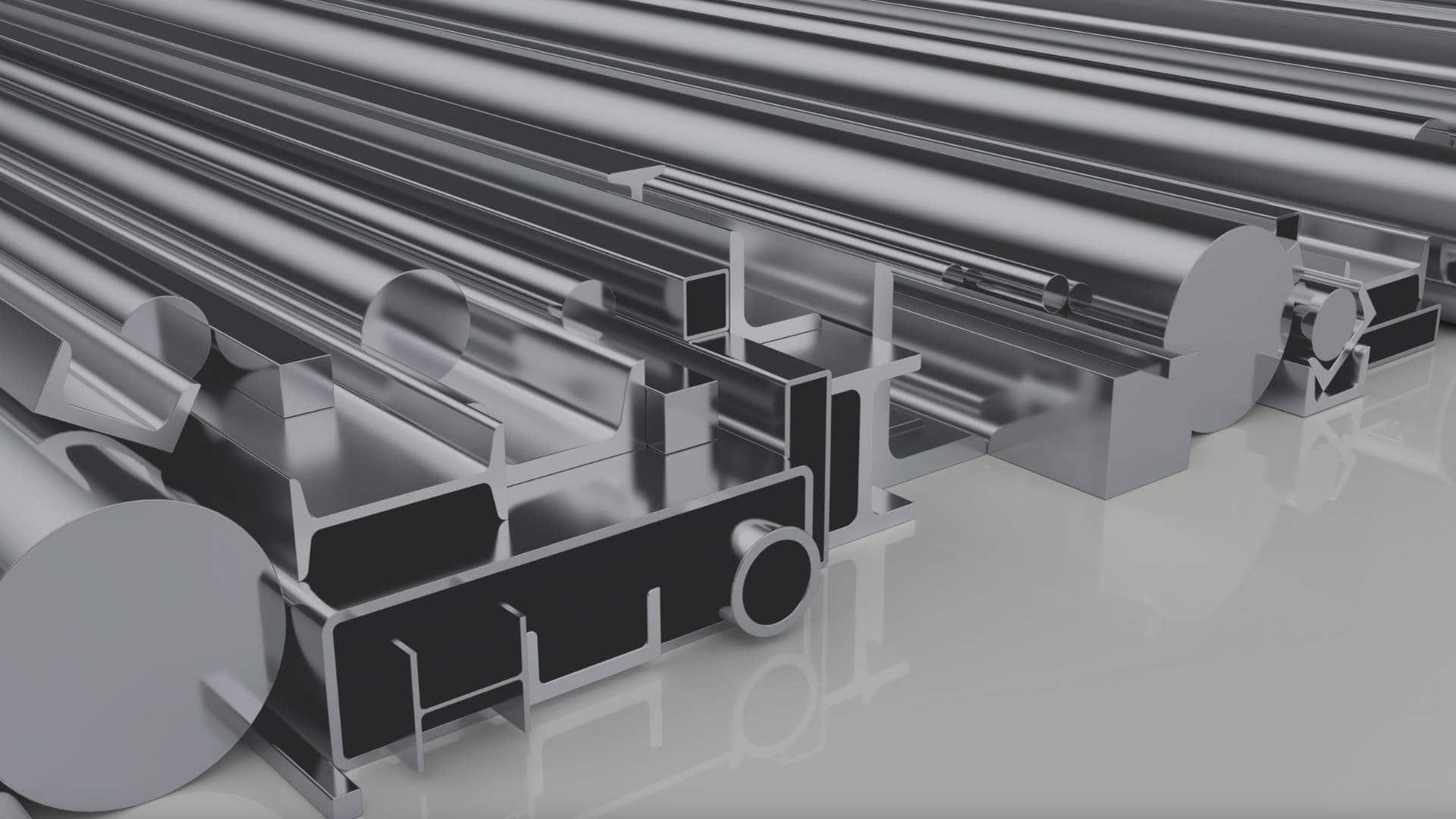
Stainless steels 310, 310S, and 310H combine excellent high-temperature properties with good ductility and excellent weldability.
• 310 (UNS S31000): Resistant to oxidation up to 1150°C.
• 310S (UNS S31008): Low-carbon version for improved corrosion resistance in humid environments.
• 310H (UNS S31009): High-carbon version for optimized mechanical strength at high temperatures.
________________________________________
Chemical composition (%)
Grade C Mn Si PS Cr Ni
310 ≤0.25 ≤2.00 ≤1.50 ≤0.045 ≤0.030 24.0–26.0 19.0–22.0
310S ≤0.08 ≤2.00 ≤1.50 ≤0.045 ≤0.030 24.0–26.0 19.0–22.0
310H 0.04–0.10 ≤2.00 ≤0.75 ≤0.045 ≤0.030 24.0–26.0 19.0–22.0
________________________________________
Mechanical properties
Grade Tensile Strength (MPa) Yield Strength 0.2% (MPa) Elongation (%) Hardness (HRB) Hardness (HB)
310 / 310S / 310H ≥515 ≥205 ≥40 ≤95 ≤217
________________________________________
Physical properties
(annealed condition)
Property Value
Density 7750 kg/m³
Modulus of elasticity 200 GPa
Coefficient of thermal expansion (0–538°C) 17.0 µm/m°C
Thermal conductivity 14.2 W/mK (100°C) / 18.7 W/mK (500°C)
Specific heat 500 J/kgK
Electrical resistivity 720 nΩm
________________________________________
Main features
• Excellent oxidation resistance up to 1150°C.
• Good corrosion resistance in humid environments (especially 310S).
• Excellent creep and thermal fatigue resistance (especially 310H).
• Good weldability with recommended 310S electrodes.
• Hardness not achievable by heat treatment (cold hardening only).
________________________________________
Heat treatments
• Annealing: 1040–1150°C followed by rapid cooling.
• No heat hardening possible; cold working to increase strength.
________________________________________
Industrial applications
• Furnace parts.
• Burner components.
• Carburetor boxes.
• Heat treatment baskets and supports.
• Heat exchangers.
• Welding electrodes.
________________________________________
Corrosion resistance
• Resistant to nitric acid fumes at room temperature and molten nitrates up to 425°C.
• Good resistance in oxidizing atmospheres and high-temperature fuels.
• Sensitive to carbide precipitation between 425–860°C if resistance in aqueous environments is required.